

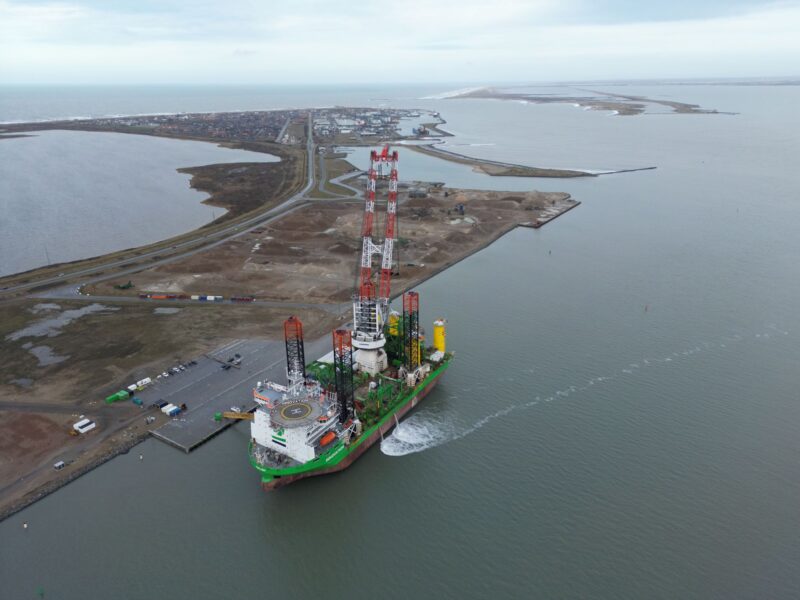
 The innovative Low-Zinc™️ aluminum alloy, developed by BAC Impalloy, offers significantly higher capacity and a longer lifespan per kilogram of anode. This not only reduces replacement frequency but also minimizes environmental impact and costs. With its low zinc content, the anode contributes to a more sustainable solution. Zinc is classified as a toxic “light heavy metal” that pollutes aquatic environments.
Green Ambitions in Thyborøn
Thyborøn Port has ambitious plans to become a sustainable harbor, including a goal to achieve CO₂ neutrality. Initiatives such as fossil-free vehicles and waste sorting are already in the pipeline, but the harbor is also working to find innovative solutions for operational areas where green alternatives are not yet fully developed.
The harbor views the testing of the Low-Zinc™️ anode as an important step in this direction. “We want to do our part for the green transition. The fact that maritime transport is one of the most environmentally friendly modes of transport gives us a responsibility to make green choices wherever we can,” says Christian Vrist, Technical Manager at Thyborøn Port.